






























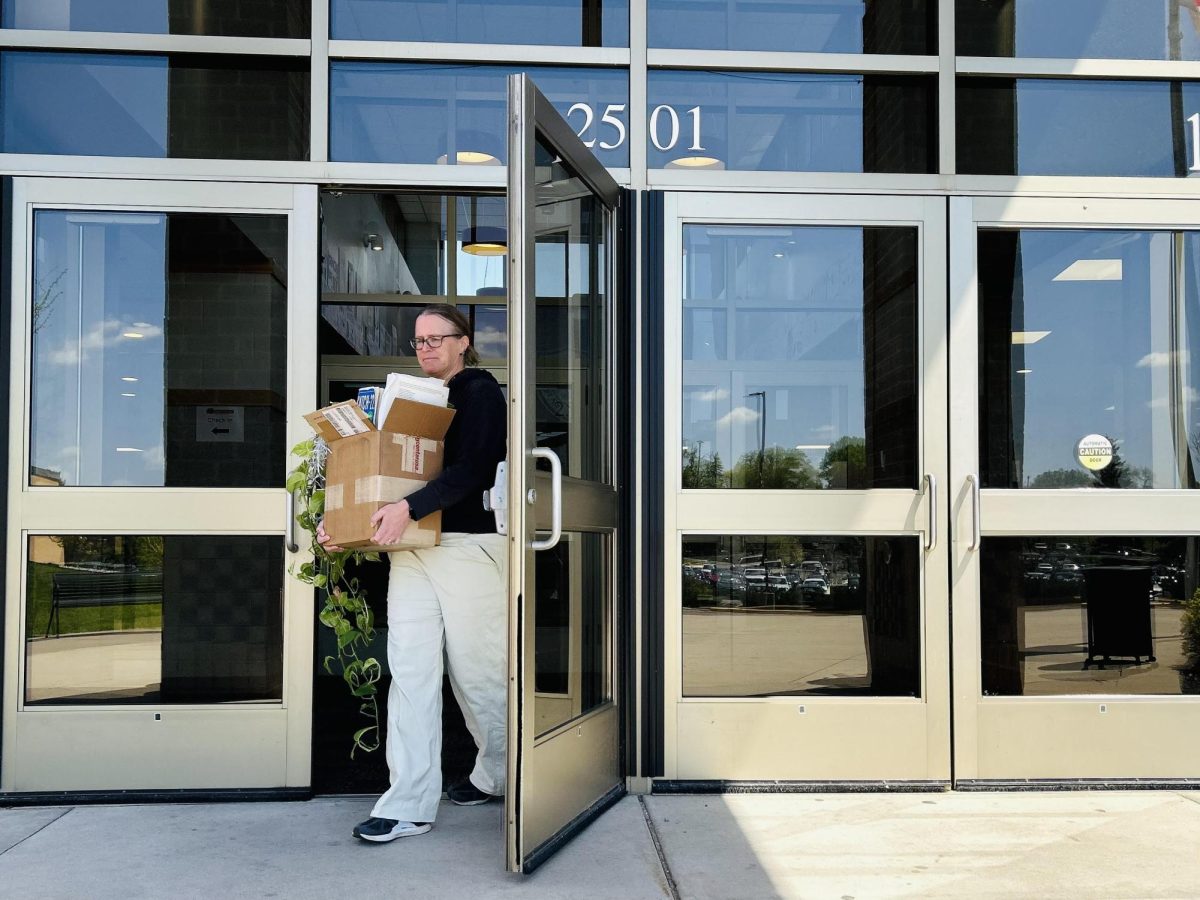
Due to low enrollment in recent years, some faculty members’ contracts have not been renewed for the 2026-2027 school year. BSM’s president, Danielle Hermanny, declined to comment on how many teachers will not be returning and whether or not there were cuts at the administrative level.
The final layoff decisions were made by BSM’s high school principal, Dan Wrobleski, but he consulted with many people beforehand. “If you guys had gotten me two weeks ago, I’d be crying right now, and people don’t see that, and maybe people don’t care. It’s a very emotional time for me, and I have to grieve because it’s part of a job I don’t want to do,” Wrobleski said.
Although BSM’s CFO declined to comment on the state of the budget, many faculty members understand that BSM is in a financial position where layoffs are necessary. Even so, no one wants to be in a situation where they are asked to leave. “The fact of [the layoffs] is less troublesome, I guess, except for worrying about people’s futures. It’s scary, because some people leaving are farther into their careers, and it’s not as easy to pivot when you’ve only done one thing your whole life,” English department chair Tiffany Joseph said.
Over the past few years, BSM has seen consistently lower enrollment. In the 2020-2021 school year, BSM held 1,195 students; today, there are 1,040. BSM is also seeing smaller classes each year: the current senior class has 206 students, but the freshman class has 154.
Several factors have led to BSM’s decline in enrollment. During the COVID-19 pandemic, enrollment hit record highs since BSM offered in-person classes at a time when many other schools did not. After the pandemic, numbers have dwindled. “We saw a lot of families say, ‘I want my kid in school.’ And we would say…they were more committed to the in-person aspect than to the full community, so they didn’t necessarily stay as long as we anticipated,” BSM Director of Admissions Betsy Van Cleve said.
Another factor towards BSM’s enrollment decline is the 2008 recession. The lack of financial security that lingered for years significantly lowered birth rates. Now, the kids born at that time are entering high school, so schools across the country are feeling the effects of lower birth rates and are receiving fewer applicants. “[There’s an] enrollment cliff that’s approaching colleges and universities. That’s what’s working its way through middle and high schools now, in addition to just an overall decline in students in Minnesota [because] the birth rates have declined over time,” Hermanny said.
Low enrollment rates affect BSM in many ways—one is smaller class sizes and fewer sections of each class. BSM’s goal is to keep each class size around 21-24 students, so when there are fewer students attending the school, fewer sections are needed. “The average class size is 21 [students] to one teacher. It came to a point this year where enrollment was even a little less. And so now, what do you do if you have more teachers than the 21-to-one?” Wrobleski said.
When making layoff decisions, Wrobleski did not look at teacher salaries; instead, he considered other factors. “There were multiple, multiple things that I looked at. If they have a [teaching] license, what their area of expertise is, and if that fits with what we’re needing,” Wrobleski said.
Hermanny emphasized that her main priority is the students and ensuring they receive the best education possible. “The goal always is to provide students with an excellent educational environment. And every decision we make is driven towards what’s in alignment with our mission and values, and what provides our students the best possible education,” Hermanny said.
The changes for next year affect each department differently. Science department chair Mark Peterson said one science teacher will not be returning next year, and Joseph said two English teachers will not be returning. Department chairs for social studies, business, visual arts, math, world language, and theology declined to comment on the layoffs.
However, business department chair John Sabol said enrollment in business classes has increased for next year, and there will be more sections of his classes. The learning specialist department was also not affected by cuts, and chair Kristin Gilbertson said there is a waiting list for classes in the middle school. Similarly, there were no cuts in the counseling department, although department chair Amanda Anderson said there was a cut last year.
Joseph is one of the English teachers not returning next year, but not because she herself was laid off. “It was definitely my choice… And then it wasn’t the only factor in the decision, but I’m not being replaced. So if I didn’t [leave], someone else would. I felt like I was in a better position mentally and financially than a younger teacher to do that, but I tried to make the decision in consultation with my family, my kids, and [in consideration of] our finances,” Joseph said.
Choir teacher and music department chair Miriam Augsburger is also leaving BSM. As a result of fewer kids enrolled in music classes, Augsburger said her contract was cut to a point where she would no longer receive health insurance. “[It was] a choice I had to make for myself, rather than for the students, rather than for my job. I had to put myself first,” Augsburger said.
BSM faculty members are feeling the weight of losing colleagues, some of whom they’ve worked with for many years. “I’ve heard from some people themselves who’ve told me that they’re leaving, and it makes me very sad. I’ve been here for 24 years, and I think most of the time when people have left in the past, they’ve left of their own volition. And so this is one of the first times that I’ve ever experienced this… It’s hard for everybody, because it’s people that we’ve been working with for so many years. And it also feels kind of awful because my part in the world is just fine,” Anderson said.
Despite the sadness, faculty members are coming together to provide extra support to one another. “I’ve definitely seen us go out that happy hour more often, or randomly stop and make sure we have a conversation with someone instead of passing by in the hallway,” engineering department chair Charles Nepomuceno said.
Some of the teachers leaving have felt especially supported. “I have hugged people in the last few weeks that I have not had more than two conversations with, so I felt very supported by the other staff at BSM who have heard the choices I’ve made, had to make,” Augsburger said.
Despite the losses, BSM plans to come back strong next year. One of the school’s biggest focuses moving forward is increasing enrollment. The addition of the sixth grade this year also aims to help students stay at BSM for high school. “The addition of sixth grade really is a great opportunity for us to engage with families earlier…once BSM students start here, they typically stay here, so I think about that [making sure the sixth grade stays stable] as a strategy and opportunity for us,” Van Cleve said.
BSM is also working to strengthen relationships with partner Catholic schools, enhancing the school’s image on social media, and improving overall marketing tactics. “From an enrollment perspective, we’re down compared to where we have been, but I think you’ll see us swinging back up in the coming years,” Van Cleve said.
The school still aims to provide the best education possible, even with fewer teachers. “Certainly we’re losing a voice, a contributor to our department, but I think that you know, we’re going to continue to offer a strong science selection, a strong science experience for students,” Peterson said.
Things may look different next year, but BSM’s strong sense of community will remain. “There’s going to be hard times, and you have to kind of just lean on your people when those hard times happen. So I think it’s good for students to see that there are humans, not just teachers, working here,” Anderson said.