


























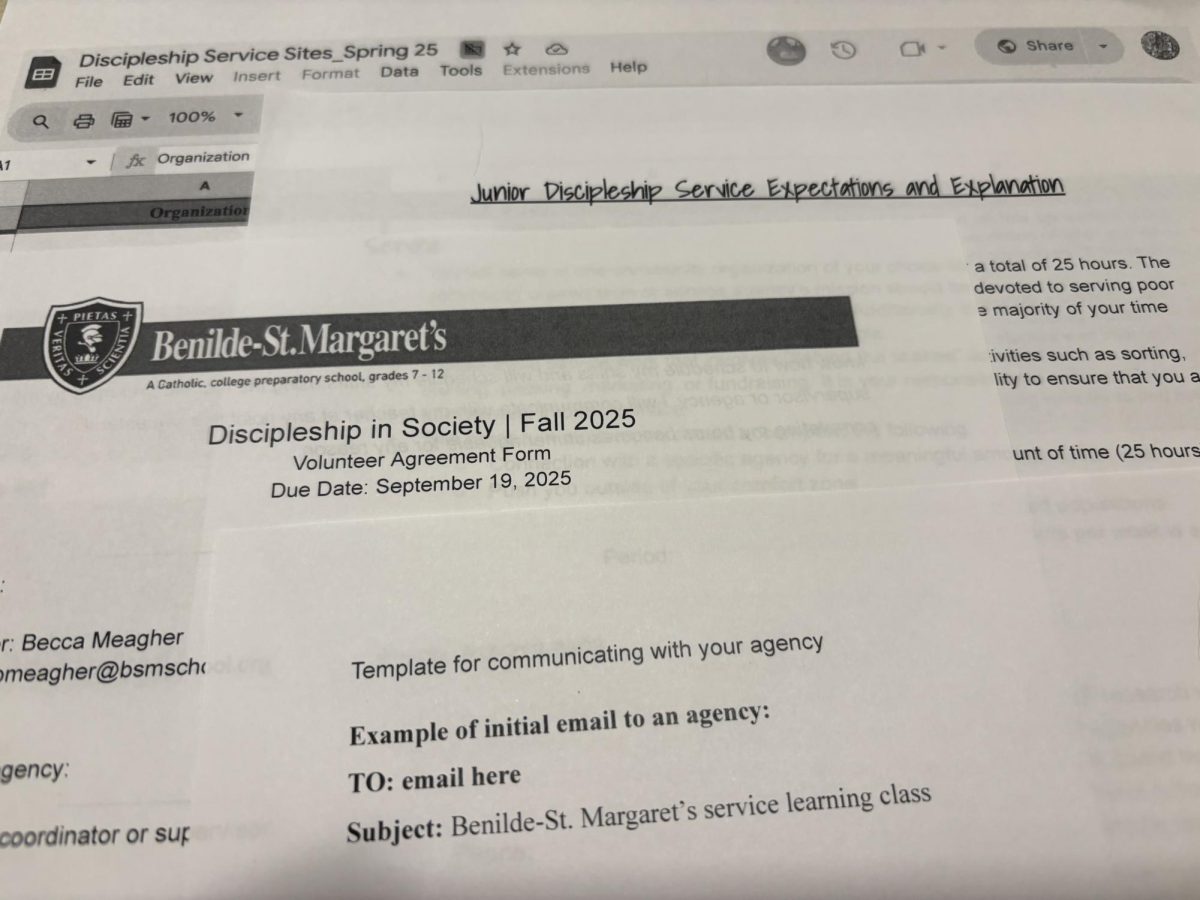
Juniors taking Benilde-St. Margaret’s required Discipleship class commit to serving at one volunteer site to accumulate a total of twenty-five service hours at the start of the 2025-2026 school year. However, shortly after students committed to serve at one organization, problems surfaced. The most flexible service site, Loaves and Fishes, shut down its only location offering weekend options. This unexpected change left students scrambling to earn enough volunteer hours through alternative organizations.
While service-learning remains a core component of the BSM identity, the service requirement for discipleship classes fails to accommodate students without cars, students with jobs, sickness, service center shutdowns, and busy schedules.
BSM requires juniors to fulfill twenty-five hours of service at one service site, which must directly interact with a vulnerable community, in a one-semester theology class. The focus on service-learning helps students deepen their empathy, gain new social skills, and interact with different communities and sectors of their local area.
However, the organizations and opportunities students can choose from to complete their hours require students to have access to a car and the ability to take time off work. Juniors without licenses, whether by choice or circumstance, must depend on parents, who must either take time off work or sacrifice their own personal commitments, to drive them to and from the service site multiple times per week for nearly three months. Moreover, it doesn’t account for working students who might need the money to either help with bills or cover their own gas costs.
Not only does the twenty-five-hour requirement assume a level of privilege, but it also creates stress and frustration for students who live far away from the school or participate in after-school activities. The organizations largely take place close to the school community or center in Plymouth or Chanhassen. Juniors who live farther away from these areas must drive farther or delay their trip home, ramping up gas costs and obstructing students’ personal time. The service opportunities often take place after school throughout the week, conflicting with after-school activities, like sports or the arts.
Many of the volunteering sites only offer a limited number of shifts. For example, Intercity Tennis only offers enough opportunities for students to miss one session in the required time frame for semester one students. If students get sick, they will fail to meet their hours, and they will likely receive a lower grade. In addition, if service sites shut down, which one location of Loaves and Fishes did, the provided backup option is Feed My Starving Children. This service organization requires adult supervision in order to participate, so affected students have to get parents to take time off work or take time out of their personal schedules to attend.
In the future, the theology department should consider lifting the one service site requirement, offering more service sites in diverse locations, offering options at the school, or creating an equitable bussing system.