
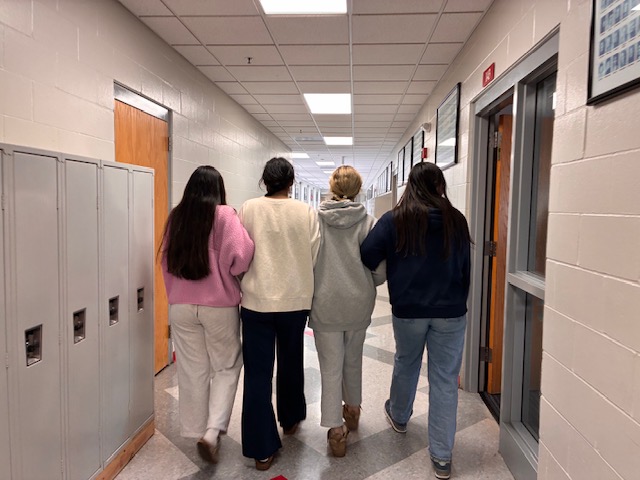










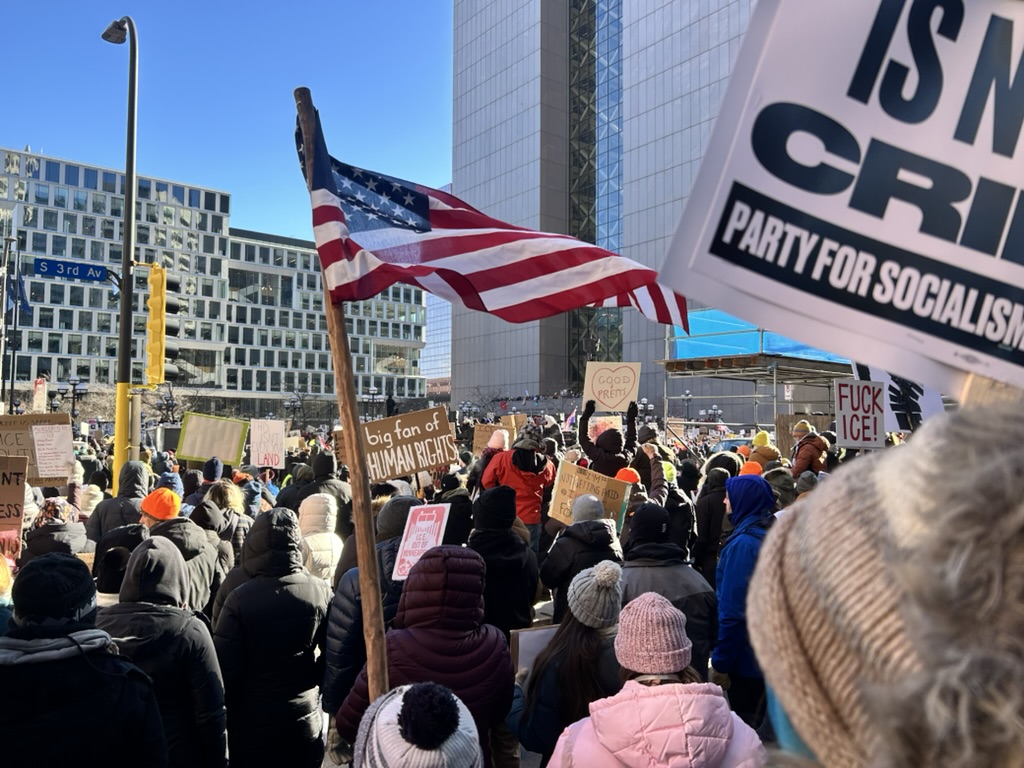















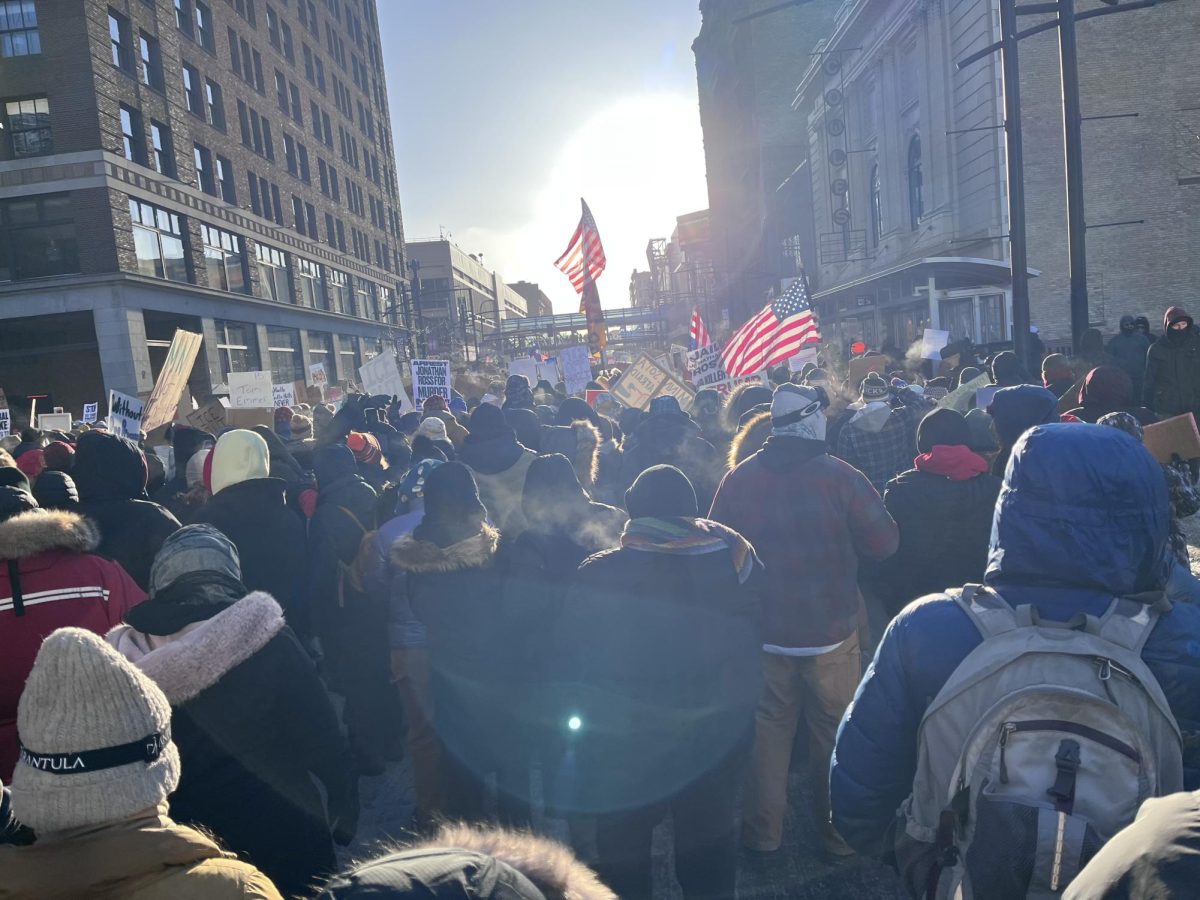
A massive surge in the presence of Federal Immigration and Customs Enforcement (ICE) agents has sent shockwaves through Minnesota’s education system, as well as the Minneapolis community. The recent spike in ICE agents around the Twin Cities has led to plummeting school and workplace attendance, campus lockdowns, and rapid adjustments to lifestyles as families and workers navigate what we as a city can describe as a climate of pervasive fear.
The disruption is tied to “Operation Metro Surge,” an initiative that has seen over 3,000 federal agents from ICE and Customs and Border Protection (CBP) deployed in the Twin Cities metropolitan area. While federal authorities state the operation targets specific individuals who have broken the law, the visibility of agents near school bus stops, school parking lots, and residential neighborhoods has fundamentally altered the daily operations of many school districts.
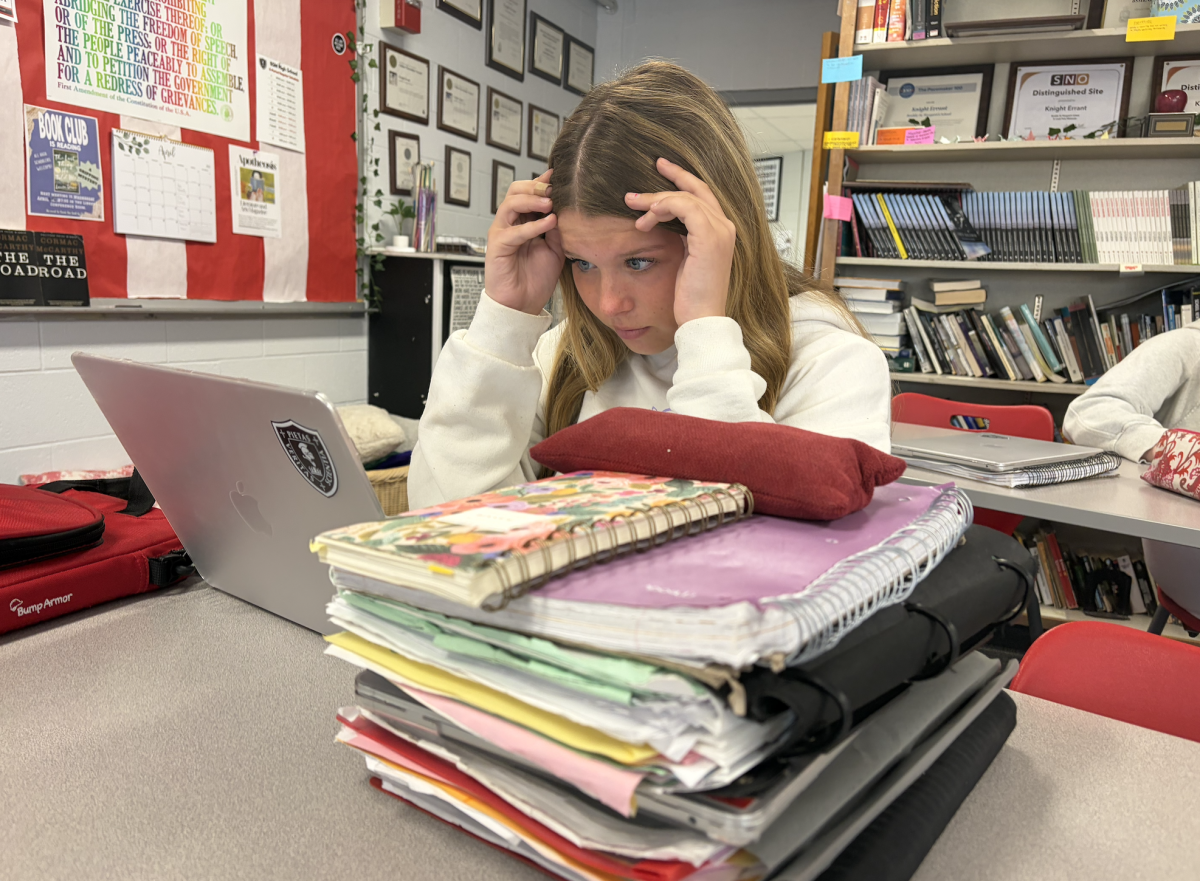
In the Twin Cities area, the impact has been almost immediate and measurable. In the districts with widespread federal activity, up to 20 to 40% of students have been absent in the past weeks. In early January, the Minneapolis Public School district took the rare step of a full system-wide closure following a series of violence and a fatal shooting that involved federal agents. The incident, which occurred just blocks from a high school campus, led to a multi-day shutdown as officials scrambled to establish safety protocols that would allow students to return without the fear of witnessing one of their classmates or teachers being taken by federal enforcement.
For decades, schools were largely considered “sensitive locations,” meaning immigration enforcement was restricted. However, recent policy shifts have left administrators struggling to define the boundaries of their authority. While federal agents generally require a judicial warrant to enter a classroom, they are permitted to operate in the public spaces surrounding school grounds, including the areas where students wait for buses, and parents conduct drop-offs.
The purity of the classroom depends on a singular, fragile ingredient: trust. When armed, masked agents began appearing in school parking lots and shadowing buses driving around the cities, that trust was destroyed. This shows our communities and families that no places are off limits. This is not law enforcement in the traditional sense; it is militarization. In districts across Minnesota, attendance has slumped, not because of the winter temperatures or snowstorms, but because parents are making the agonizing choice to keep their children at home rather than risk a permanent separation. For a state and a country that prides itself on the constitutional right to a K-12 education, the current climate represents a catastrophic failure to protect that promise.
Beyond the schools, the ICE agents have effectively placed Minnesota under a state of occupation. If 1,000 more federal agents were deployed, they would outnumber local police in some areas by five to one. The daily life of the city has been fundamentally altered. The sound of whistles signaling the approach of ICE agents marks a return to a level of community trauma that hasn’t been seen in years.
The federal government justifies this escalation as a necessary strike against crime, yet the tactics tell a different story. When agents use a five-year-old child as bait to lure out family members or detain educators in front of their students, the goal is clearly not public safety; it’s intimidation. This appears less like a targeted legal operation and more like a strike against a state that has historically stood beside its immigrant residents.
Minnesota’s schools should be places to bring students into positive futures, not grounds for federal raids. By allowing the reach of the state to extend into the hallways where children are first learning about democracy, they are learning that the law is something to be feared, not something that is meant to protect them. If agents continue to treat the Twin Cities and their schools as battlefields, the casualties won’t just be from residents but the very soul of the community itself.