
































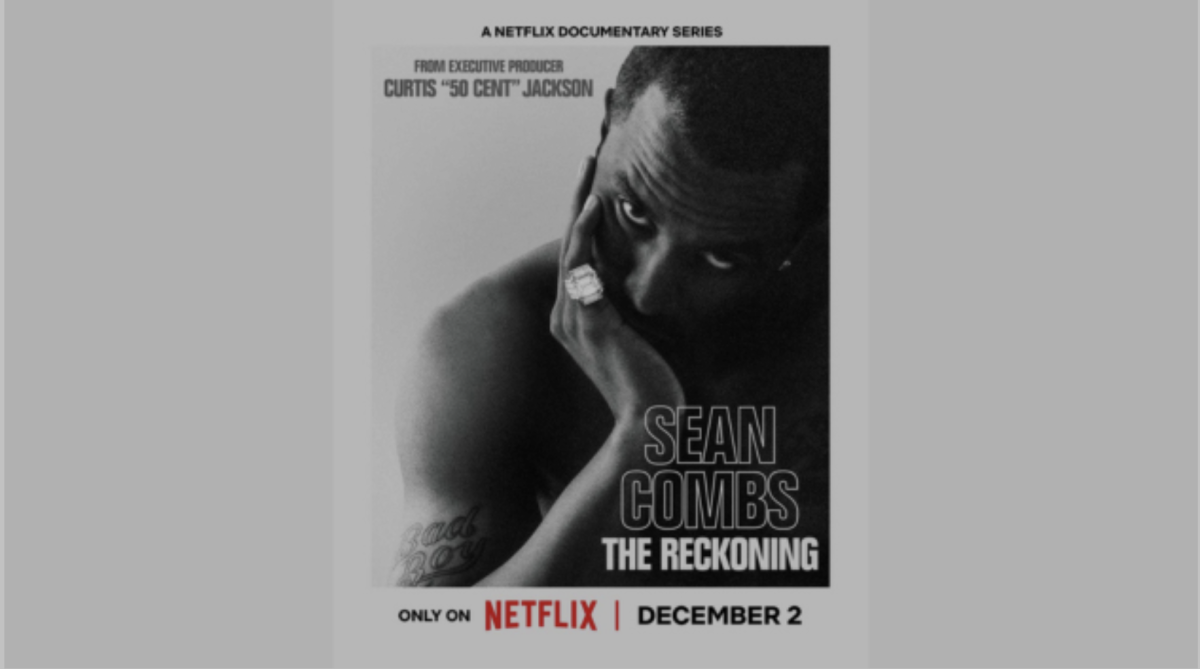
The new Netflix documentary about Sean “Diddy” Combs, Sean Combs: The Reckoning, produced by American rapper 50 Cent, has been the topic of conversation since it came out and leaped to number one in Netflix’s Top 10 Shows. The documentary looks deep into the past about the rise and fall of Combs, from when he was the most powerful figure in hip-hop, to losing it all due to accusations of sex trafficking, racketeering, physical and sexual misconduct, and coercion. He was later found guilty on two counts of transportation for prostitution leading to fifty months in prison and a fine. The documentary showed Combs’ very early success in hip-hop, starting at eighteen years old. The show highlights the critical point that Combs had so much power and influence that it terrified people from ever speaking out about what he did, leading to his newest cases and controversies.
The documentary starts with Combs’ early life and rise to fame in the music industry. It shows his central role in shaping the music industry in the 1990s R&B and hip-hop scenes through his company, Bad Boys Records. This record company helped shape and launch the major careers of multiple artists, introducing a whole new sound into the hip-hop genre. Old footage, music videos, and interviews make the case for why Combs was once viewed as a music icon and visionary, explaining how his influence stretched beyond music with fashion, branding, and marketing. This part was really shocking to me because I didn’t know he had that much influence at this time, and I didn’t realize the drama between Tupac Shakur. When I first watched this, all of the information I was getting was leading me to believe Comb’s had something to do with Shakur’s murder.
As the series continues, the show shifts to talk about how it wasn’t talent and potential that ran the music industry, but power and influence. Interviews with former collaborators and employees discussed how the authority Combs wielded may have protected him from criticism and consequences for many years. These claims were all backed by journalists and legal analysts featured in the documentary, who stated that “celebrity status” can complicate accountability. The documentary differed from most because it didn’t rely solely on opinions; it included timelines, public records, camera footage, and personal texts and emails between Combs and the victims.
One of the most vulnerable points in the documentary is the emotional weight it placed on the people involved. Victims affected by Combs shared their experiences and the effects it had on them. The producers left out many graphic details about the situations. Still, they highlighted the main impact and strain that the sexual assault, drugs, and transportation of prostitution had on the victims’ lives, mental health, and future jobs. Many former collaborators came out and spoke about what happened to them; many recall not remembering past nights or waking up with bruises. Combs was known for being an aggressive type of person to those close to him, but it wasn’t until the hotel security footage of him beating up his then-girlfriend, Cassie Ventura, that people began to see through his mask. People in the documentary recalled many times they witnessed Combs beating Ventura, but they didn’t speak out about it, and never saw Ventura say anything about it. An interviewer in the documentary states she walked in on Combs sexually assaulting Ventura and getting told by Combs to mind her business. Ventura eventually came forward and testified against Combs, but was unsuccessful. Throughout this part of the documentary, I was in utter shock and disbelief at how he abused her in front of others in public, and people like his bodyguard, and nobody said anything until just now. The videos and stories that were told by the former bodyguard were actually haunting and ridiculous. True or not, it definitely changed the public opinion on him.
However, questions arise about the documentary due to 50 Cent’s past involvement with Combs. The documentary shows the long-standing rivalry between 50 Cent and Combs, although he doesn’t make a significant on-screen presence. Still, some viewers think that certain scenes in the documentary, such as interviews and comments, are influenced by past personal history between the figures. In my personal opinion, I think that this was a payback move by 50 Cent to Combs, because it felt targeted.
The most important part of the documentary is the controversy it raises with every episode, not just about Combs, but about the broader topic of accountability and speculation that comes with it. It challenges the viewers to think about how the industry responds to allegations of this magnitude. This issue involved controversial figures with very public profiles. This documentary focuses on making figures take accountability and responsibility rather than just trying to shock people. The behind-the-scenes aspect of the case makes it feel like a solid argument with multiple perspectives, rather than a purely speculative argument based on hearsay and rumors.
Finally, the documentary ends by reviewing both Combs’ career and a tragic period in time. The documentary didn’t take a stand on either side of the allegations, but rather showed people an up close perspective. It neither attacks nor defends Combs but rather shows the complicated perspectives and controversies that came with his legacy and career. While viewers continue to question the documentary’s benefits and motives, the series effectively forced them to look at people in power a little more closely. The documentary teaches viewers not to always believe the happiness in celebrity relationships and to start thinking about what really goes on behind the scenes. The documentary was very beneficial for the victims involved, who were too scared to speak out at the time of their incident, giving them justice and a voice again that was taken away from them.