


































In the past, kids had to wait their turn to use the family landline, often sharing one phone with the whole household. They’d dial numbers on a rotary phone, memorize friends’ numbers by heart, and hope no one picked up on the other line mid-conversation. Now, it’s a simple “wyd” (an abbreviation for “what are you doing?”) on Snapchat or a blue bubble that says it all.
From full sentences to abbreviations, such as “idk,” meaning “I don’t know,” or “brb,” short for “be right back,” the way we communicate has become quicker and more casual. Additionally, the shift from handwritten letters to instant snaps that disappear in seconds shows how technology has transformed our words, but also the speed of the way we connect. Slang, emojis, and voice notes are now everyday language, not just changing the way we talk, but how we connect. As technology continues to evolve, so do our texts. Older generations are often confused by the slang or abbreviations.“Because the older generation especially doesn’t understand slang, and it keeps evolving, they’re left in the dust,” sophomore Brooke Kinkead said.
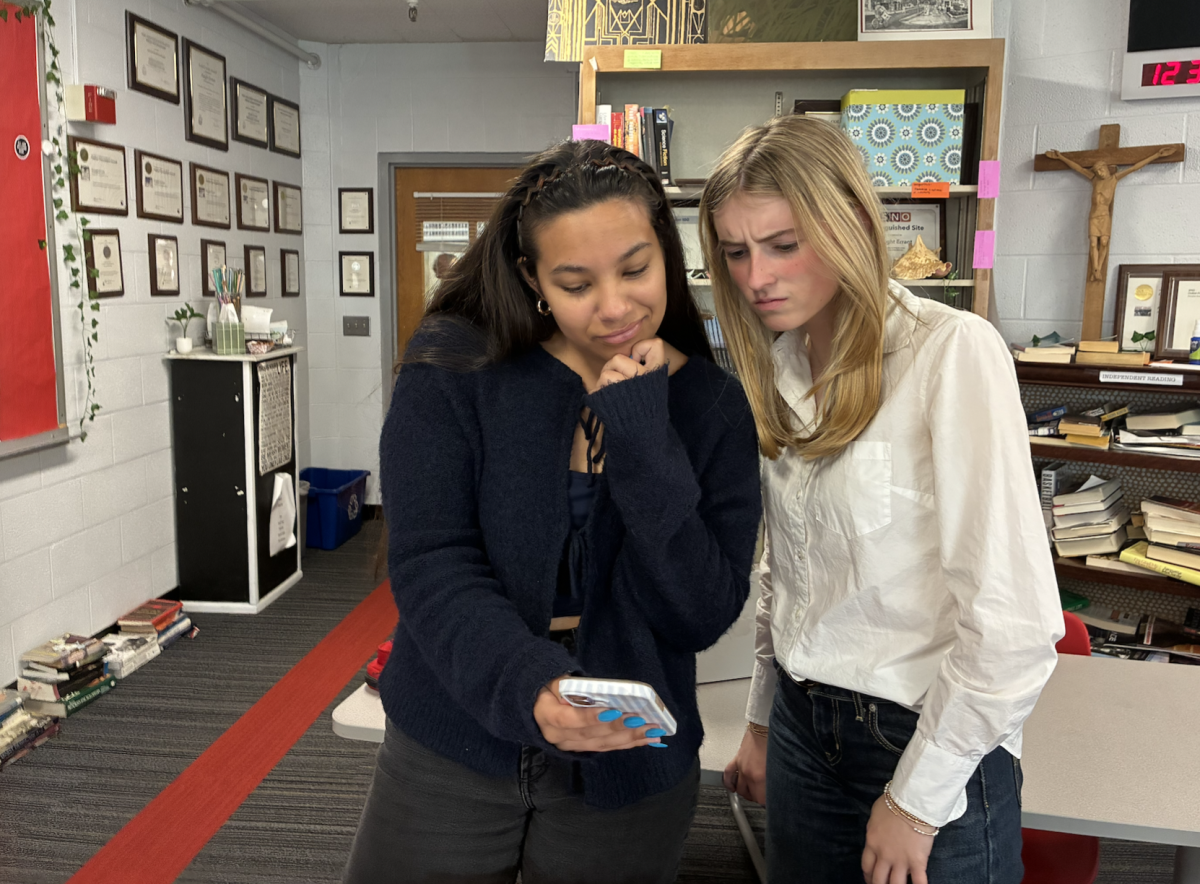
Millennials, Boomers, and Gen X often find themselves confused by the latest slang and abbreviations. A 2023 survey by Preply found that 98% of parents struggle to decode 2023 slang, with only 2% knowing all the terms listed. Some parents don’t use or aren’t familiar with popular apps among the younger generation, like TikTok and Snapchat, where much of this communication amongst teens takes place on platforms that are designed for speed and informality. Snapchat and iMessage dominate conversations among teens, with each platform playing a different role depending on who they’re talking to. “I usually use Snapchat with my friends [and] I only really use iMessages with my family, because Snapchat is more of … a younger thing and I feel like iMessages is a lot more formal,” Kinkead said.
The rise of online communication also changes how comfortable people feel expressing themselves. For many, it’s easier to be direct when they’re not speaking face-to-face. This is one of the negatives of technology being so prominent in today’s world; a normal conversation in person can be nerve-racking, even if you text that person. This is also a root problem of cyberbullying, allowing people to hide behind screens. “When I’m emailing a teacher about something I want, it’s easier to be more forward … like asking them to grade a paper than if I were to go to them face to face, I would be a little bit scared,” Kinkead said.
But this digital shift has also created moments of miscommunication, especially between generations. Abbreviations common to teens can leave older family members confused or left out of the loop. This language gap can lead to funny misunderstandings, showing how different communication habits have become. Scarlett Scheff, a junior at BSM, experienced one of these moments firsthand. “I messaged my grandpa ‘IDK’ to a question he asked, and he replied with ‘what does IDK mean?’ I said ‘I don’t know’ and he replied with ‘Well, I don’t know either,” Scheff said.