

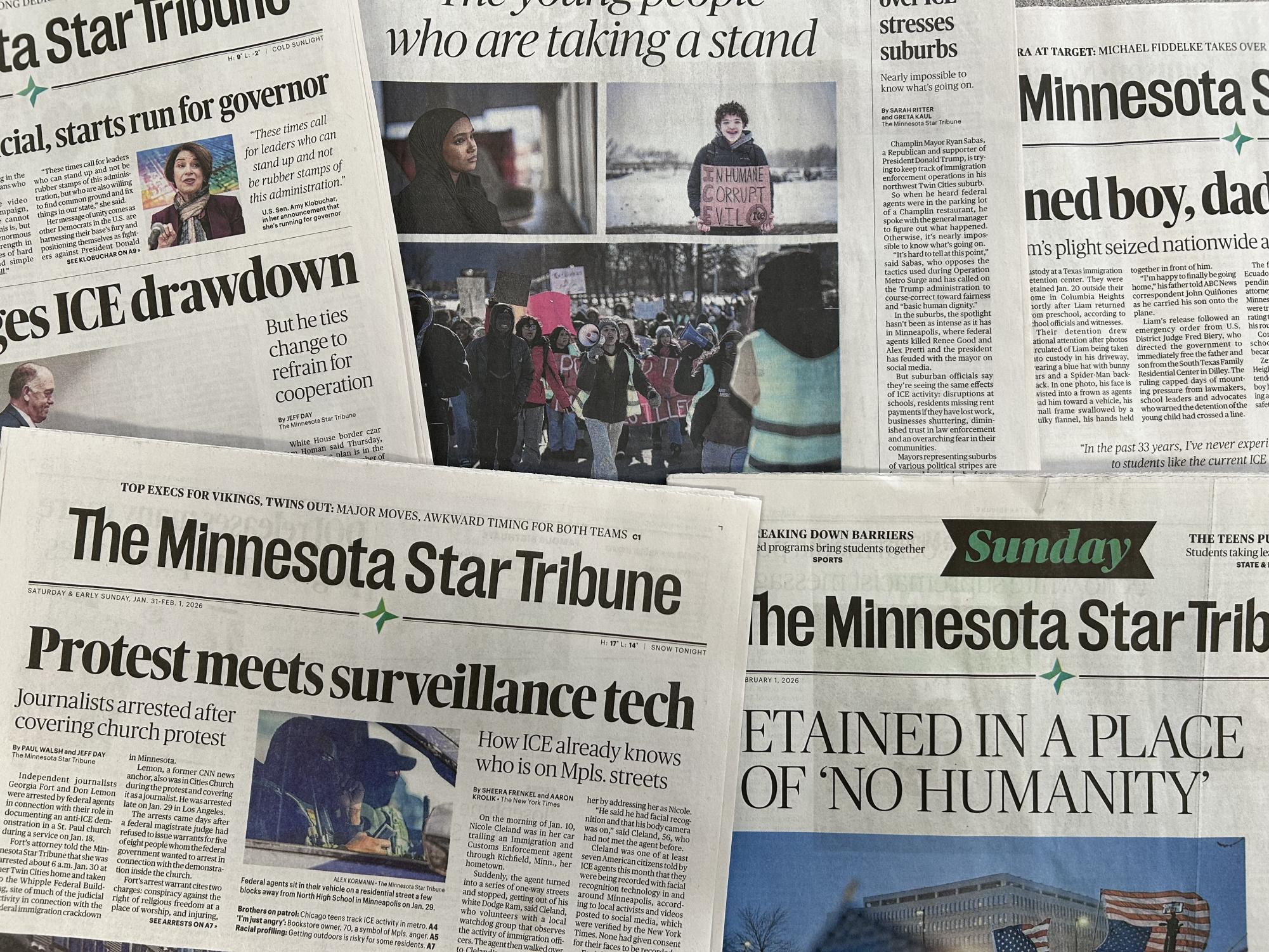

Minnesota has headlined the news for the past few weeks due to ICE protests in and around Minneapolis after the shootings of Renee Good and Alex Pretti, but many students could only tell you about it from their daily 30-second scroll on TikTok. Some teachers are struggling to bring up events they feel must be discussed, as everything might be considered political, and students are reluctant to respond.
“As much as I would love for kids just to care about every current event that’s happening in the Twin Cities area, sometimes they don’t, and so sometimes those conversations can fall flat,” theology teacher Nathan Schlepp said.
Many teachers, including math teacher John Groess and physics teacher Tanner Stevens, acknowledge current events in their prayers before the beginning of class. This time is more one of reflection than an open conversation, but both say they are willing to talk about events with students, should a student ask.
Other teachers will talk about events if they are related to the curriculum, particularly in social studies classes, but otherwise don’t tend to bring up the news. “As certain things come up, my preference is to insert something that gives context to the historical era that something similar might have happened in,” social studies teacher Megan Kern said.
Current events are also brought up in Barbara Watson’s Contemporary Honors English 10 class because of the relevance of the books they are reading. One book, We Are Not From Here, tells the story of immigrant children, and Watson said this prompted some discussion about ICE activity and immigration.
Few teachers will bring up current events every day, or even as they happen, because either they don’t have time with all the material they need to cover, or they know students are unlikely to respond. “I want it to come up organically and not [be] forced. I just feel like I’ll say, ‘Okay, who wants to say something?’ And then it’ll be crickets,” English teacher Anne Marie Dominguez said.
Dominguez finds that in her American Studies and English classes, if a student does bring up a current event, it’s mostly to ask clarifying questions about what happened, rather than because of a desire to discuss it. Other teachers agree and say they think part of this comes from the rise of social media and Artificial Intelligence. “I think a lot of kids get their news now from different sources than other generations, and they sometimes confuse news that is fact-based with commentary,” Kern said.
Unlike many of her colleagues, theology teacher Becca Meagher does take class time to talk about current events, especially in her discipleship class, which is focused on social justice issues and community. “It’s really important for me that I can know that they’re aware of what’s happening in the world,” Meagher said.
Art teacher Ivy Mattson says current events matter in art as well. “Art is informed by the world around us in so many different ways, whether it’s storytelling, culture, history, and it’s essential to bring that into the classroom space so that students can become more responsibly engaged in the world and in their artistic practice,” Mattson said.
Mattson’s art students are currently working on a project related to the Catholic Social Teaching “Option for the Poor and Vulnerable,” where they are tasked with creating a portrait of someone in their lives who demonstrates social justice, and she’s found that conversations around current events between students have arisen during this project.
Some of the students’ reluctance to discuss current events stems from more polarizing opinions and views among students today, and it comes with a fear that they will be judged for their views. “Today, you have to be a lot more sensitive in case someone gets angry about basic facts,” Groess said.
Stevens and Schlepp both say their students this year are far less likely to talk about current events—especially anything that might be considered political—than they were 10 years ago. “I think [overall it’s trending that] there’s less interaction in my class,” Stevens said. “If I compare this to the 2016 election season, every student wanted to talk and share their feelings about every possible thing that was happening.”
Schlepp adds that students will indicate in writing that they want to talk about current events, but then not actually engage in conversation. “Lots of people want to hear what other kids think, but if you get too many of that, those that just want to hear but don’t want to speak, you can’t have a great conversation,” Schlepp said.
Whether or not students actively participate in conversations, teachers hope their students are seeking out news and the truth and thinking about events that impact them and people around them. “We can’t ignore things in our world, but we can choose how we can positively interact with it,” Mattson said.