











Pond Hockey Tournament raises $50,035 for Jablonski February 1, 2012 at 7:58 pm
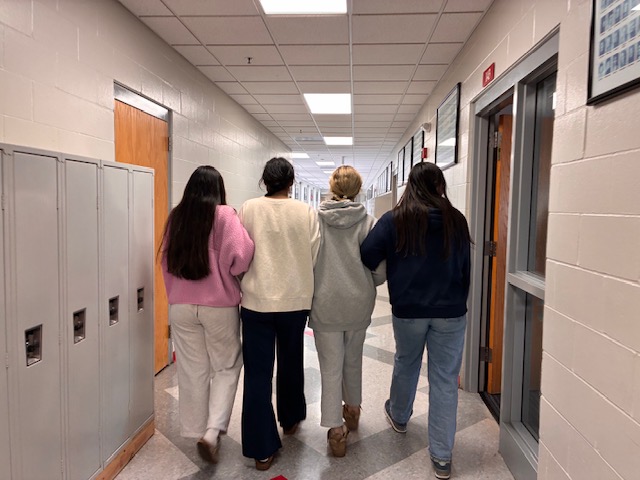
Students and teachers swap outfits for Catholic Schools Week February 1, 2012 at 7:58 am
Catholic Schools Week kicks off with pjs and honors February 1, 2012 at 7:58 am
One Act play takes second place at sub-sections February 1, 2012 at 7:57 am
Youth In Goverment members lobby for government changes February 1, 2012 at 7:56 am

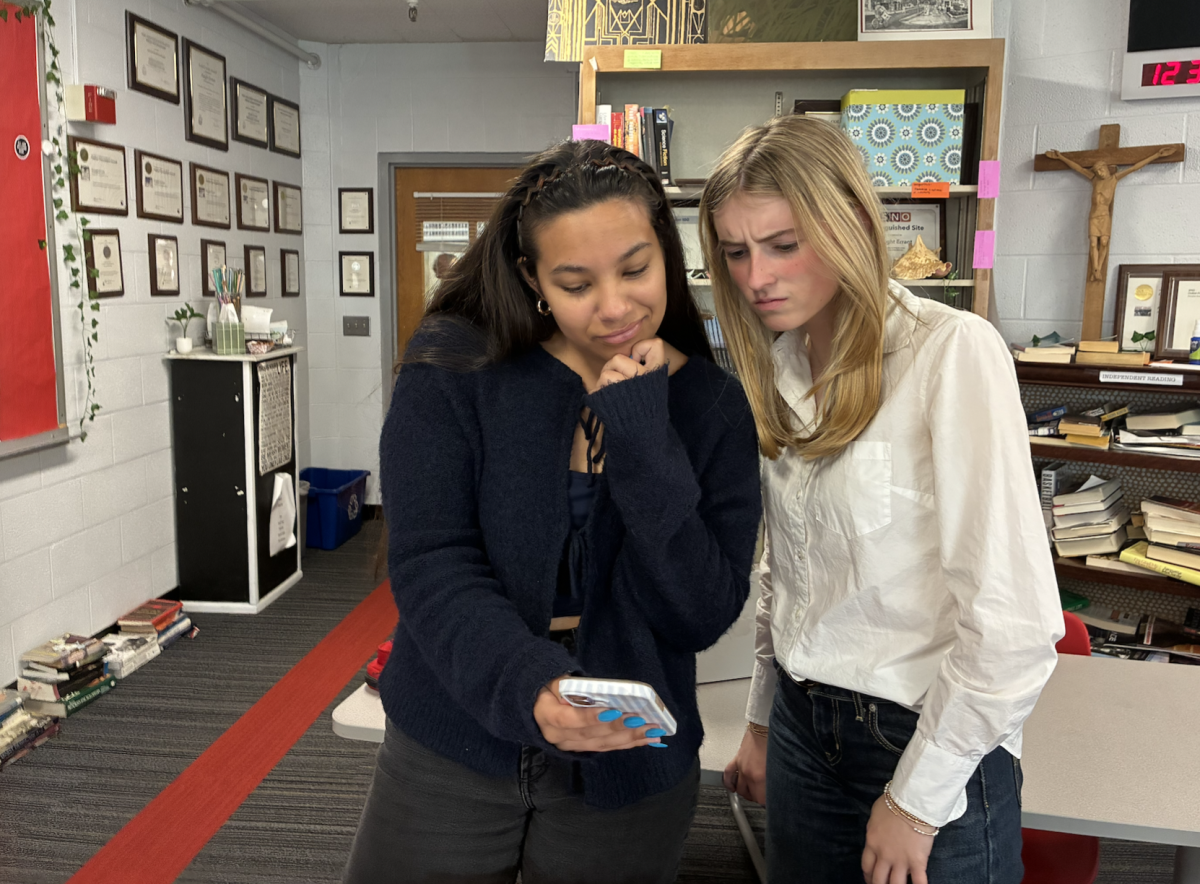
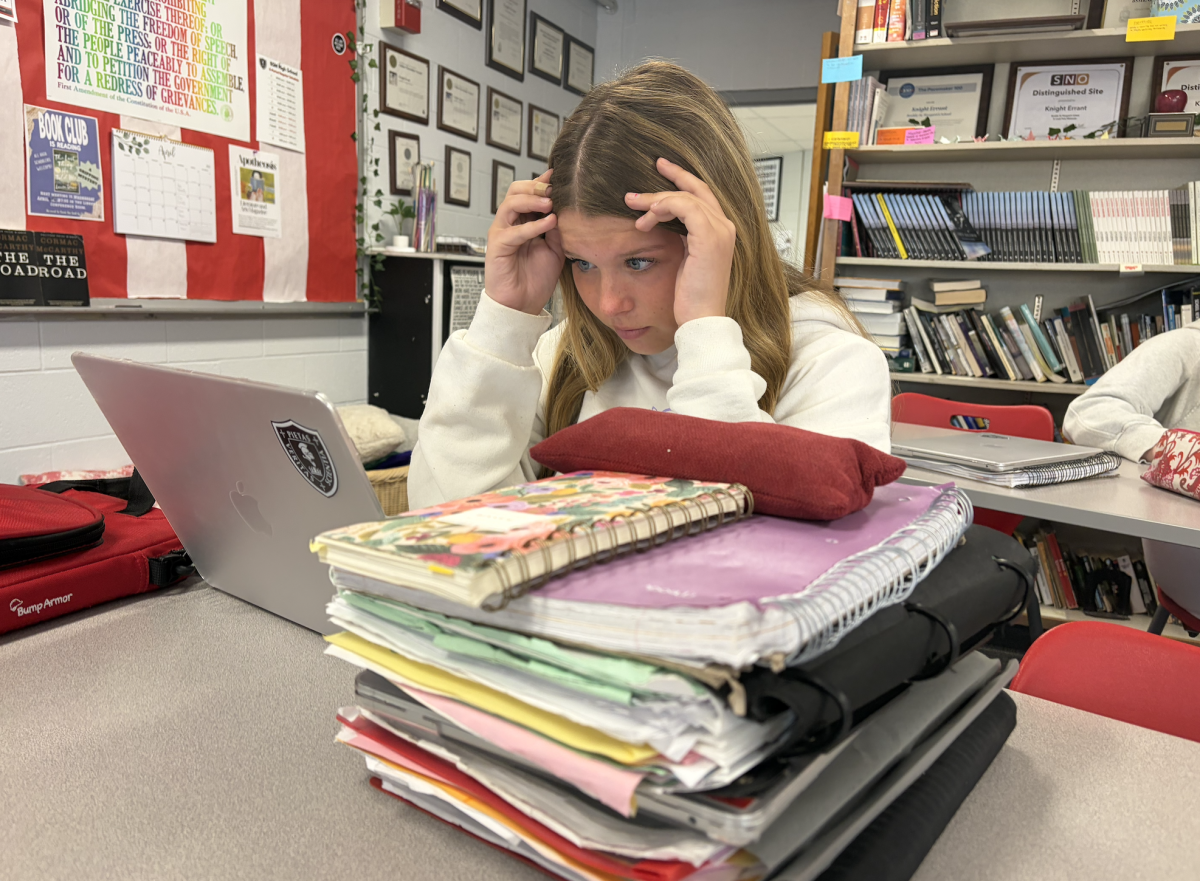
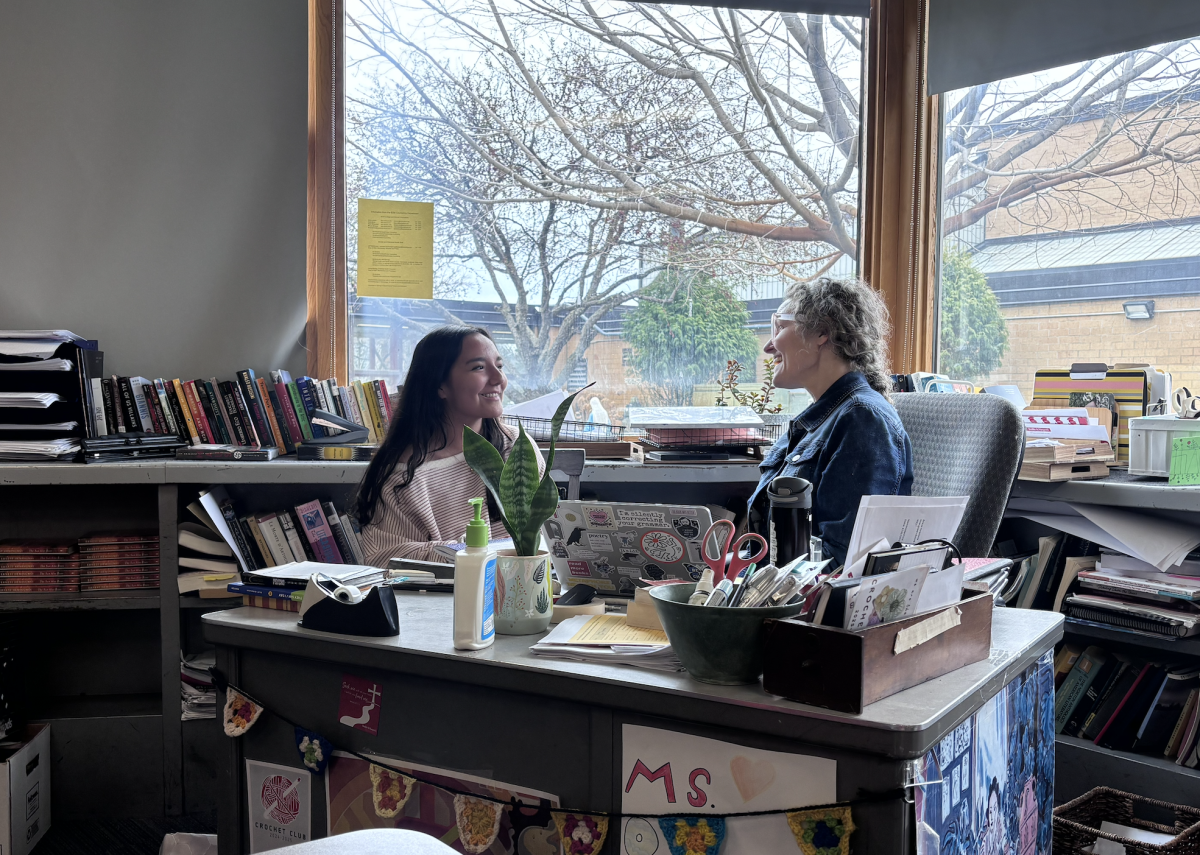
American Literature teacher Ms. Anne Marie Dominguez teaches The Great Gatsby to her students in the newly developed class, American Studies, alongside U.S. History teacher Ms. Megan Kern. (Chris Bell)
February 3, 2012
Nicole Sarquis, Staff Writer
History teachers tend to ramble off unrelatable facts about flappers, bootlegging, and the ease of life in the “Roaring 20s” during a typical U.S. History class, leaving their students with no real understanding of the subject. At the same time, English teachers’ enthusiasm over F. Scott Fitzgerald’s “The Great Gatsby” can only be understood... Continue Reading
February 6, 2012
Matt Muenzberg, Sports Editor
“We need our Kyle Rau,” said boys’ hockey head coach Mr. Ken Pauly, referencing the former Eden Prairie Eagle who not only led the team in scoring on their way to last year’s state championship, but also consistently showed up when his team needed a goal. BSM’s Kyle Rau is junior forward Grant Besse, who has been on a roll lately, averaging over 2.8 goals a game in his last seven games. He twice found the back of the net and added an assist in a 4-3 win over section rival Wayzata on Monday, Feb. 6. With section seeding on the line, there was a playoff-like atmosphere at the packed Plymouth Ice Center. “I loved it,” said Besse. “I thrive on that stuff.” Head-to-head match-ups... Continue Reading

Junior Shannon Galvin rehearses for the upcoming Les Miserables performance wither her fellow cast members. (Giulia Imholte)
January 27, 2012
Emily Kline, Staff Writer
Blue Water Theatre Company, one of the Twin Cities’ top performing arts groups for youth, is taking on “Les Misérables,” one of musical theatre’s most famous works, for their winter production. Juniors Rachel Hogen and Shannon Galvin, along with sophomore Rachel Wallace, joined the cast in late November and are currently in rehearsals for the... Continue Reading
February 1, 2012
Nick Hillson, Staff Writer
The Stop Online Piracy Act (SOPA) is a bill running through Congress in an attempt to curb the illegal uploading and downloading of copyrighted information and programs. Unfortunately, due to extremely vague wording and unclear definitions, the censorship proposed could extend to websites such as Facebook, various e-mails, and any other free forum. Not only is SOPA ineffective for all but the technologically impaired, but it violates our rights and benefits only a small handful of elites. SOPA works by requiring websites and Internet Service Providers (ISPs) to search through sent information and to censor any infringing material. Not only does this ignore the privacy guaranteed in the Constitution... Continue Reading

The Mock Trial team had a succesful season at several competitions due to immense practice and help from professional lawyers. (Photo courtesy of Jim Vogl)
February 3, 2012
Mallory Hoch, Staff Writer
Beginning in October, the Mock Trial team has practiced every night from 5:00 p.m. to 7:00 p.m. in room 121 in preparation for upcoming competitions. Coming to a close on January 31st, the season ended on a strong note, making it to subsections before loosing their last competition. The season commenced with general practices to help initiate new members.... Continue Reading
| Sport | Date | Opponent | Result | W/L | |
|---|---|---|---|---|---|
| Girls Hockey | Sat, Feb 04 | Totino-Grace | 9-0 | Read Story | W |
| Boys Hockey | Sat, Feb 04 | Spring Lake Park | 15-0 | W | |
| Wrestling | Sat, Feb 04 | TBA | 9th Place | ||
| Girls Basketball | Fri, Feb 03 | Spring Lake Park | 57-39 | W | |
| Boys Basketball | Fri, Feb 03 | Spring Lake Park | 67-65 | Read Story | W |
| Girls Hockey | Thu, Feb 02 | Spring Lake Park | 6-0 | Read Story | W |
| Wrestling | Thu, Feb 02 | Dassel-Cokato | 21-58 | L | |
| Girls Basketball | Tue, Jan 31 | Minneapolis Southwest | 70-38 | W | |
| Boys Hockey | Tue, Jan 31 | Jefferson | 7-1 | Read Story | W |
| Girls Hockey | Sat, Jan 28 | Hill-Murray | 1-3 | Read Story | L |
| Boys Basketball | Sat, Jan 28 | North Branch | 82-21 | Read Story | W |
| Girls Basketball | Sat, Jan 28 | North Branch | 66-40 | Read Story | W |
| Sport | Date | Time | Opponent | Location |
|---|---|---|---|---|
| Boys Hockey | Wed, Feb 08 | 7:30 | Shattuck-St. Mary's | Shattuck-St. Mary's |
| Girls Basketball | Fri, Feb 10 | 7:15 | St. Louis Park | St. Louis Park |
| Wrestling | Fri, Feb 10 | 6:00 | Chisago Lakes | Home |
| Boys Hockey | Sat, Feb 11 | 2:30 | Totino-Grace | St. Louis Park |
| Dance Team | Sat, Feb 11 | 1:00 | Sections | Austin |
| Boys Hockey | Tue, Feb 14 | 7:00 | Chisago Lakes | Chisago Lakes |
| Girls Basketball | Tue, Feb 14 | 7:15 | Columbia Heights | Home |
| Girls Basketball | Thu, Feb 16 | 7:15 | Waconia | Home |
| Girls Basketball | Fri, Feb 17 | 7:15 | Irondale | Home |
| Boys Hockey | Sat, Feb 18 | 2:30 | Stillwater | St. Louis Park |
| Wrestling | Sat, Feb 18 | 8:00 | Section Opponents | Totino-Grace |
| Girls Basketball | Tue, Feb 21 | 7:15 | St. Francis | Home |
Dann Fry
September 30, 2009
Filed under Opinions
Our culture is saturated with drugs, whether political bodies wish to acknowledge the fact or not. One sixth of the US population reports having used marijuana, with users of harder substances also in the millions; indeed, the cash in your pocket has a 90 percent chance of being contaminated with cocaine.
Presently our government is waging an expensive (and fruitless) war on the nation’s morals. They are ineffectually trying to completely eliminate drug use, an impossible task, while ignoring the tangible effects drug use has on society. The only way out is legalization.
Would not our streets be filled with addicts and criminals free from consequences? In 2001 the government of Portugal announced the legalization of all drugs for personal use (including heroin and cocaine), and the results speak for themselves: drug usage overall has decreased marginally, while the number of addicts registered in rehab programs has quadrupled, because addicts in Portugal are no longer concerned with being stigmatized as criminals and punished. The same story is true around the world in places where drug policy has shifted to treat drug use as an issue of health.
The excuse for cannabis prohibition––the moat around the castle, as it were––has always been the idea that marijuana is a stepping-stone to much more addictive and harmful substances. Here, the actual experience of generations past has not meshed properly with the government line. Of the 70 million post-war Americans who smoked, 98 percent didn’t wind up on anything harder than martinis. Only a tiny fraction went on to become heroin or cocaine addicts, and the cause-effect connection to marijuana for this group was no more evident than the connection to coffee.
The underlying problem with drug legalization has always been the basic concept. The black market for drugs is the largest in the country. It is the simplest form of free-market capitalism––the rules are purely Darwinian––and has an ironic dynamic where opposition from government (read: War on Drugs) only increases the risk involved in selling, and, therefore, the profit for illicit entrepreneurs.
Drug-related crimes and violence (committed by rival gangs, displeased lenders, and junkies suddenly out a fix) increase at the same rate, which achieves nothing more than the dissuasion of timid first-time buyers and ultimately leaves the market at the whim of barbaric drug lords.
Upwards of $12 billion is spent each year on drug-control efforts. Another $6 billion is spent on inmates incarcerated for drug offenses, who account for some 20 percent of all prisoners. To date, although the drug-control budget has successfully imprisoned the entire command chain of numerous cartels and seized one-third of all South American cocaine sent over US borders, two things have been achieved: prices have gone down, and purity has gone up. These are hardly a signs of a successful policy.
The United States is a federal republic, and Congress should deal with drug prohibition the way it dealt with alcohol Prohibition. The Twenty-First Amendment did not legalize the sale of alcohol, it simply allowed state governments to make their own rules. Congress would do well to take the same initiative with illegal substances, allowing them to be sold to adults by licensed establishments.
Were this to happen, a legitimate market worth billions would sprout up overnight. Courts, prisons, and law enforcement could dedicate more resources to violent crimes. Health initiatives could flourish. Drug purity could be regulated and enforced, reducing the number of deaths from overdose, and communities would no longer be terrorized by drug crimes.

November 17th, 2010 at 2:30 pm
brilliant!
[Reply]